Introduction
When evaluating an a3 size printer price, most buyers focus on the initial sticker cost, yet the real value is determined by the synergy between the print head technology and the specialized consumables used in high-precision industrial applications. In the context of screen printing and DTF workflows, the printer is merely one component of a larger production ecosystem that includes heat presses, curing ovens, and high-grade ink systems.
The variance in pricing often reflects the machine's ability to handle diverse substrates and the precision of its ink delivery system. For businesses operating in the specialized equipment manufacturing sector, selecting a system that balances throughput with operational costs is critical. This involves understanding how A3 format capabilities integrate with subsequent processes like powder shaking for DTF or exposure units for traditional silk screening.
This guide analyzes the technical drivers behind pricing and how to align your equipment investment with specific production goals. By examining the relationship between hardware specifications and consumable efficiency, we provide a framework for calculating the actual return on investment for a3 size printer price and overall system performance.

Understanding A3 Printing Systems in Industrial Workflows

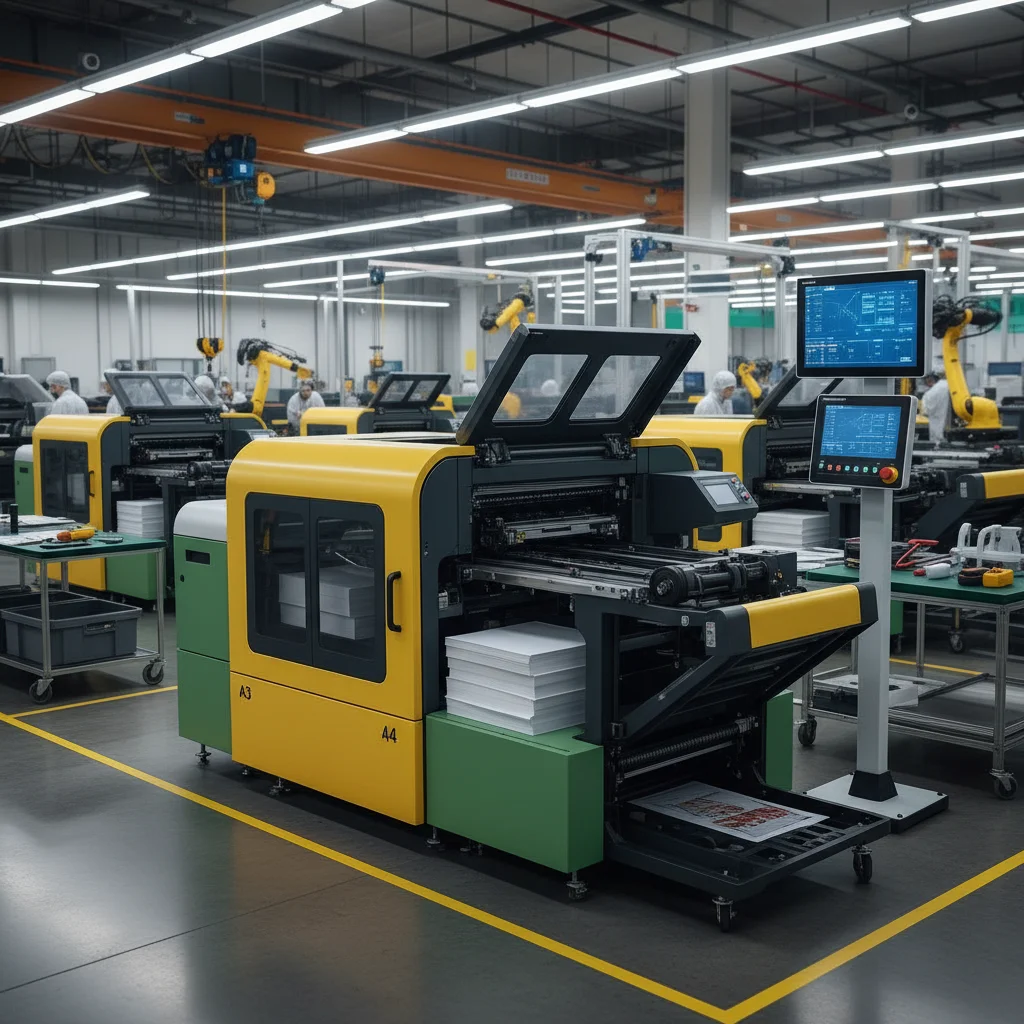
A3 size printing systems serve as the mid-range workhorse for many garment and industrial decoration shops. Unlike entry-level models, these systems provide a balance between print area and spatial efficiency, allowing for the production of most standard apparel designs without the massive footprint of A1 or larger industrial plotters. In a professional setup, these printers are often paired with DTF powder shakers and heat press machines to create a seamless transfer workflow.
The integration of these machines into a larger production line is what truly defines their utility. For example, when using a UV DTF printer, the output must be compatible with specific UV inks and films to ensure adhesion to rigid substrates. The ability of the hardware to maintain consistent ink drop volume across the A3 plane is a primary differentiator between consumer-grade machines and professional industrial equipment.
Technical Factors Influencing Hardware Cost and Performance
The cost of an A3 printing system is heavily weighted by the print head technology and the precision of the carriage movement. Industrial-grade systems employ high-resolution heads that can handle denser ink loads, which is essential for the saturation required in DTF and UV printing. Additionally, the build quality of the chassis—often utilizing reinforced aluminum components—reduces vibration, which directly impacts the registration accuracy of the final print.
The true technical value lies in the ink delivery system; professional A3 printers utilize advanced damping and capping stations to prevent ink sedimentation and head clogging, significantly reducing downtime and waste compared to budget alternatives.
Another critical factor is the compatibility with diverse ink types. For instance, machines designed for UV ink require integrated UV curing lamps, whereas DTF printers focus on the precise application of white ink layers. The precision of these mechanical systems ensures that the print area is utilized efficiently, reducing film waste and lowering the cost per print over thousands of cycles.
Determining Lifecycle Value Over Initial Purchase Price
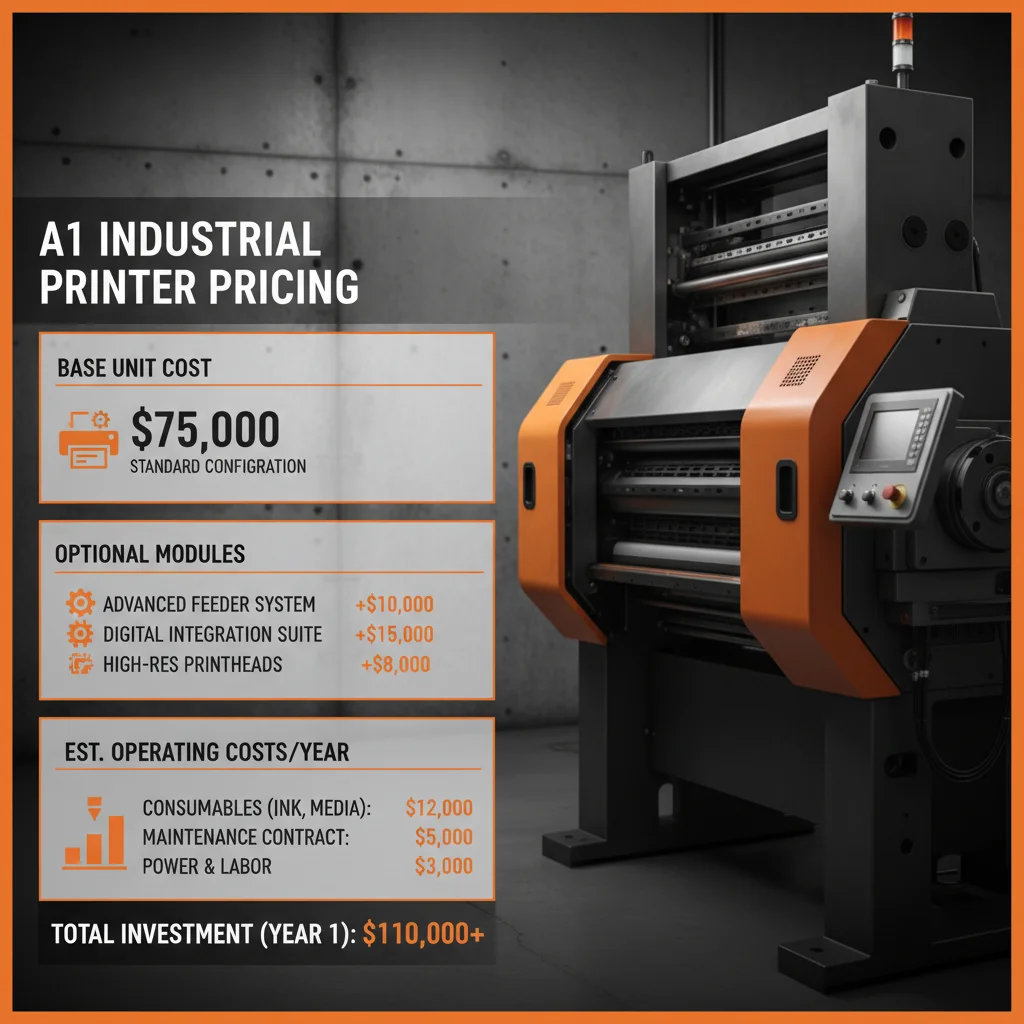
When analyzing an a3 size printer price, it is a mistake to ignore the Total Cost of Ownership (TCO). The initial purchase is only the first step; the ongoing costs of DTF film, specialized inks, and replacement print heads constitute the bulk of the expenditure. A cheaper machine that consumes more ink or requires more frequent head replacements will quickly become more expensive than a premium system with higher efficiency.
Operational reliability also translates to financial value. A system that offers stable performance under high-volume conditions reduces the need for reprints and manual corrections. For a production facility, the cost of a single day of downtime often exceeds the price difference between a mid-range and a high-end A3 printer, making reliability a key metric for ROI calculations.
Relative Cost Distribution Over 24 Months
Strategic Application Scenarios for A3 Format Equipment
A3 format equipment is most effective in "Print-on-Demand" (POD) environments where versatility is more valuable than extreme scale. In t-shirt printing and textile decoration, the A3 size allows for centered chest prints and large back designs while remaining compact enough for small studio spaces. When combined with heat press machines and DTF powders, these printers enable rapid prototyping and small-batch production with minimal setup time.
Beyond textiles, UV DTF A3 printers are increasingly used for customized branding on glass, ceramics, and electronics. The ability to print a durable, adhesive-backed decal that can be applied manually to curved or irregular surfaces makes the A3 format ideal for promotional product manufacturers who require high detail and varied output without the cost of full-scale industrial UV lines.
Future Shifts in Digital and Screen Hybrid Printing
The industry is moving toward a hybrid model where digital A3 printing handles the complexity of color and detail, while traditional screen printing is reserved for high-volume, single-color runs. This synergy allows shops to offer a wider range of services—from complex multi-color DTF transfers to traditional heavy-ink screen prints—using a shared set of finishing equipment like drying ovens and heat presses.
Technological advancements are also focusing on ink chemistry. We are seeing a shift toward more eco-friendly, water-based inks that do not compromise on vibrancy or durability. As these ink systems evolve, the hardware must adapt with better filtration and nozzle management to handle different viscosities, which will likely influence future pricing structures for A3 hardware.
Furthermore, automation is trickling down to smaller formats. The integration of automatic powder shakers and conveyor dryers with A3 printers is reducing the manual labor involved in DTF workflows, effectively increasing the output per operator and changing the way businesses calculate the productivity value of their printing equipment.
Common Procurement Challenges and Technical Solutions
One of the most common challenges for buyers is the mismatch between the printer and the consumables. Using low-grade DTF ink in a high-precision A3 printer can lead to nozzle clogging and premature head failure. The solution is to ensure a closed-loop supply chain where the inks and films are specifically formulated for the hardware's print head specifications.
Another significant issue is the environmental control of the printing area. Inkjet systems, particularly those using white ink, are sensitive to temperature and humidity fluctuations, which can cause ink thickening or drying. Implementing climate-controlled environments or using specialized ink circulation systems can mitigate these risks and extend the lifespan of the equipment.
Finally, the learning curve associated with RIP (Raster Image Processor) software often leads to wasted materials. Investing in proper training or selecting systems with intuitive software interfaces ensures that the A3 printer's capabilities are fully utilized, reducing the cost of trial-and-error during the initial setup phase.
Equipment Selection Criteria for A3 Systems
| Metric | Entry-Level | Mid-Range | Industrial-Grade | Impact on Cost |
|---|---|---|---|---|
| Head Type | Standard Inkjet | Precision Piezo | High-Density Industrial | High |
| Ink System | Cartridge | CISS (Tank) | Automated Bulk | Medium |
| Build Material | Plastic/Steel | Reinforced Steel | Aircraft Aluminum | Medium |
| Software | Basic Driver | Standard RIP | Advanced Workflow | Low |
| Curing Method | External Only | Integrated Basic | Dual-Stage UV/Heat | High |
| Maintenance | Manual Clean | Auto-Cleaning | Self-Diagnostic | Medium |
Frequently Asked Questions
The price variance is primarily driven by the print head technology, the build quality of the chassis, and the sophistication of the ink delivery system. Industrial-grade machines use higher-precision piezo heads and aluminum frames to ensure stability and resolution, which increases the initial cost but lowers the per-print failure rate.
The printer is the starting point of the workflow; its ability to lay down a consistent white ink layer determines the quality of the powder adhesion. A high-quality A3 printer ensures that the subsequent powder shaking and heat pressing stages are efficient, reducing the need for reprints and improving the final garment durability.
It can be viable for very low-volume hobbyist work, but for commercial use, budget machines often lead to higher TCO due to frequent clogging and higher ink waste. For a business, a mid-range system usually provides the best balance of initial investment and operational reliability.
The quality of the DTF film and the chemical composition of the ink are critical. Using non-compatible inks can cause permanent damage to the print head. High-grade films ensure that the ink doesn't bleed and that the transfer to the fabric is clean and sharp.
Daily maintenance, including nozzle checks and capping station cleaning, is essential for inkjet systems. Weekly deep cleans and monthly checks of the ink filtration system are recommended to prevent sediment build-up, especially when using white inks which tend to settle.
Standard DTF A3 printers are designed for textiles via transfer films. However, UV DTF A3 printers are specifically engineered to handle rigid substrates like glass and plastic. The hardware is similar, but the ink chemistry and curing lamps are fundamentally different.
Conclusion
Selecting the right A3 printing system requires a shift in perspective from simple procurement to strategic investment. By understanding that the a3 size printer price is a reflection of its technical stability, ink efficiency, and integration capability, businesses can avoid the pitfalls of under-investing in hardware that fails under production pressure. The key to success lies in aligning the printer's specifications with the intended output volume and the quality of the associated consumables.
Whether you are scaling a DTF operation or introducing UV transfers into your product line, focusing on the total lifecycle value ensures long-term profitability. For those seeking professional-grade equipment and consumables that meet these industrial standards, exploring the comprehensive range at www.silkscreenprintingsupply.com can provide the technical foundation needed for a high-efficiency printing workflow.